Research & Influence
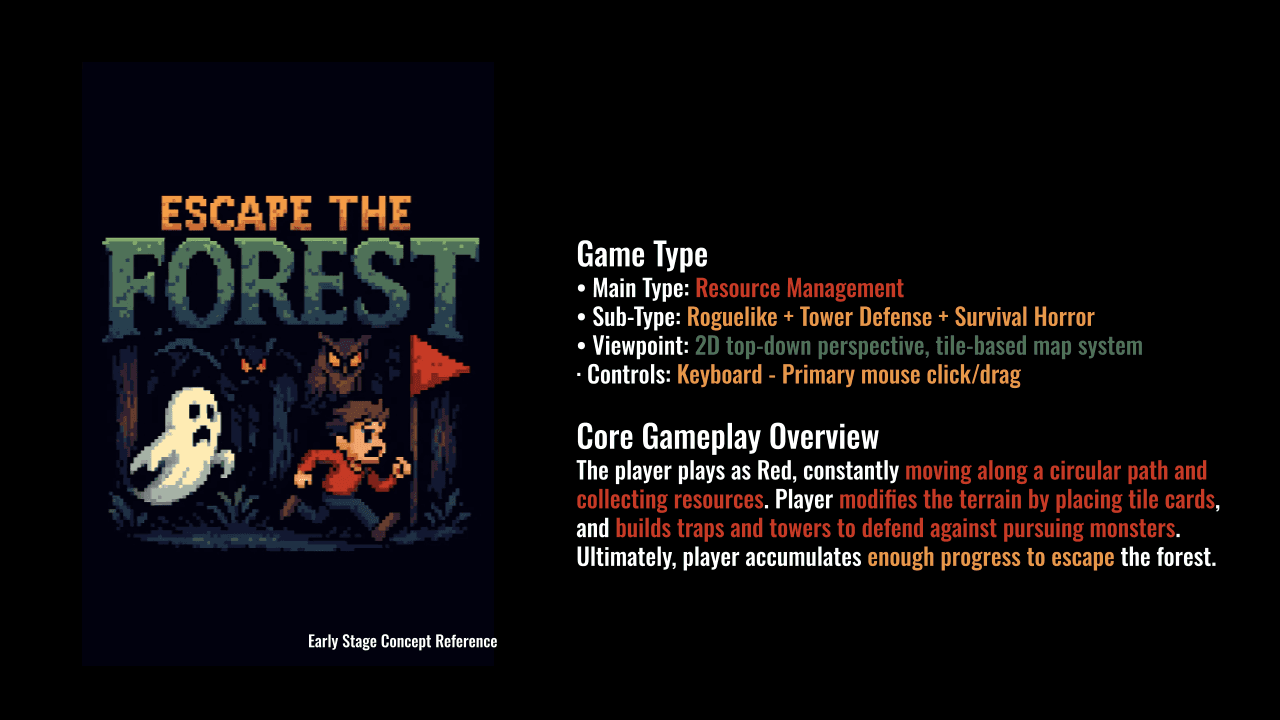
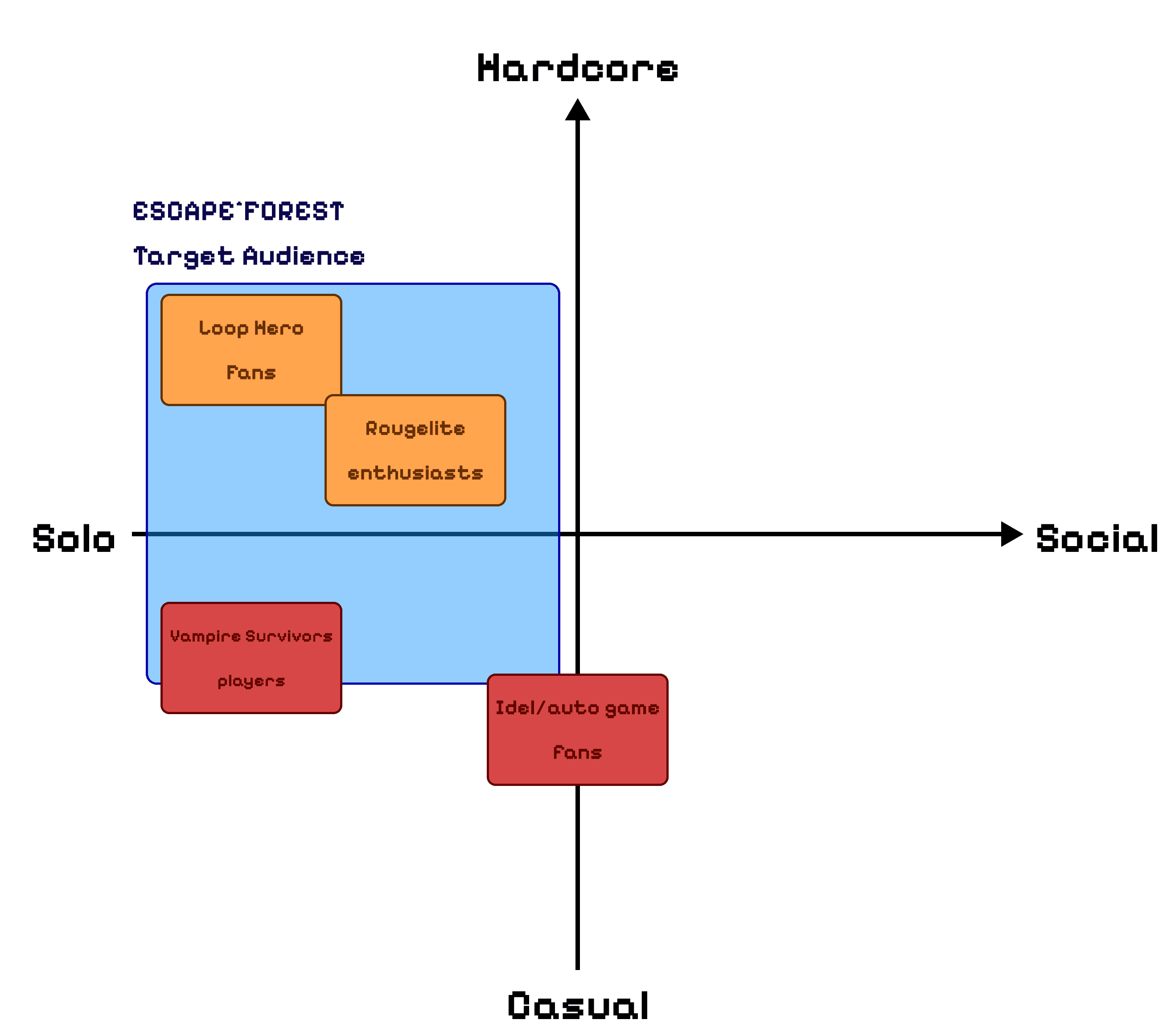
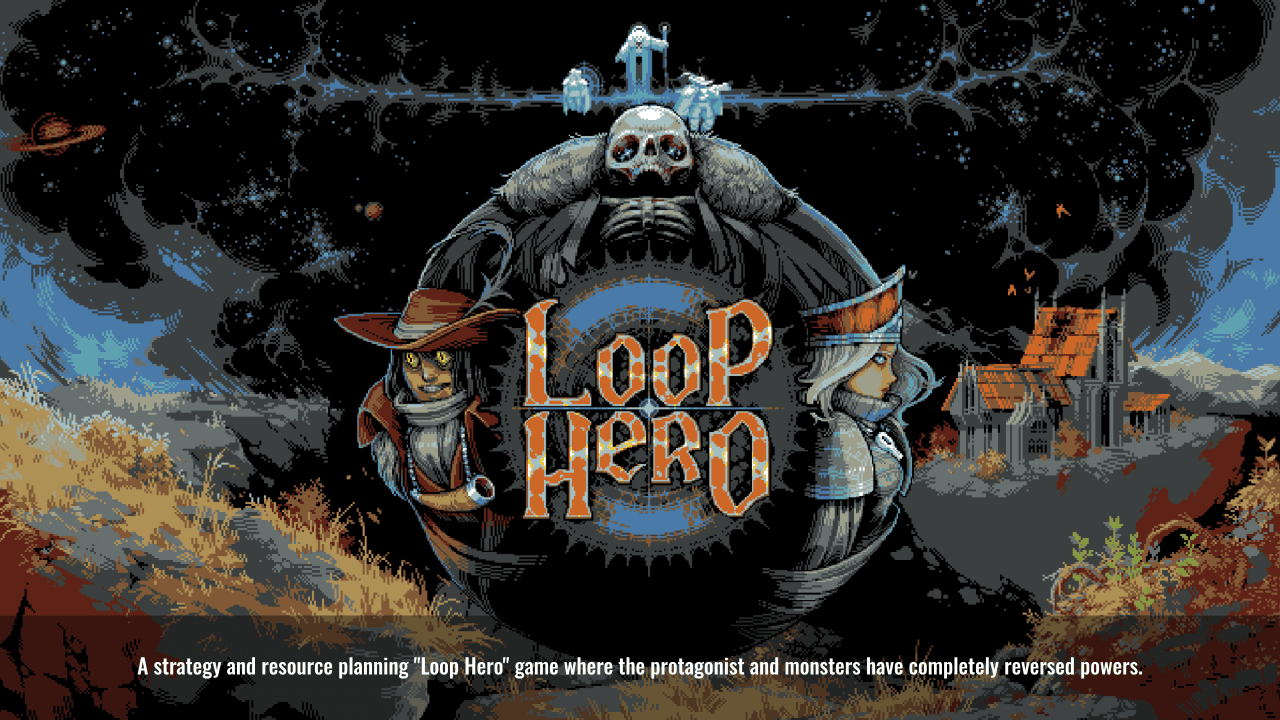
The idea started from a personal game jam with a friend and we gave ourselves 3 days to build a playable demo. At the time, we were both playing Loop Hero, so we used it as our mechanical starting point and asked: what happens if we completely flip the logic?
The core inversion: In Loop Hero, the player is powerful. Combat decisions are about maximizing gains through engagement. We reversed every assumption which leads to the protagonist becomes vulnerable, and instead of the player hunting monsters, monsters now hunt her.
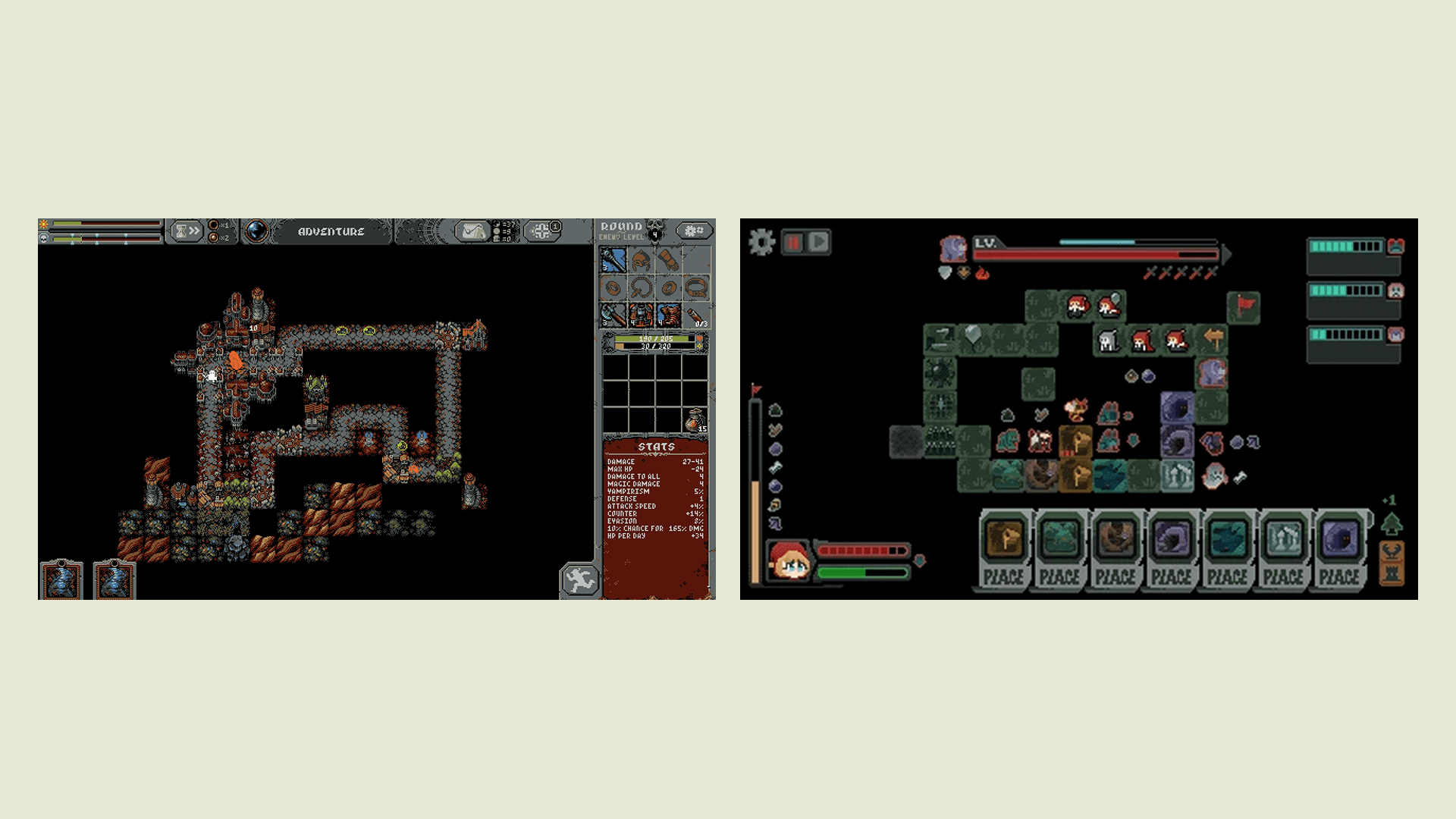
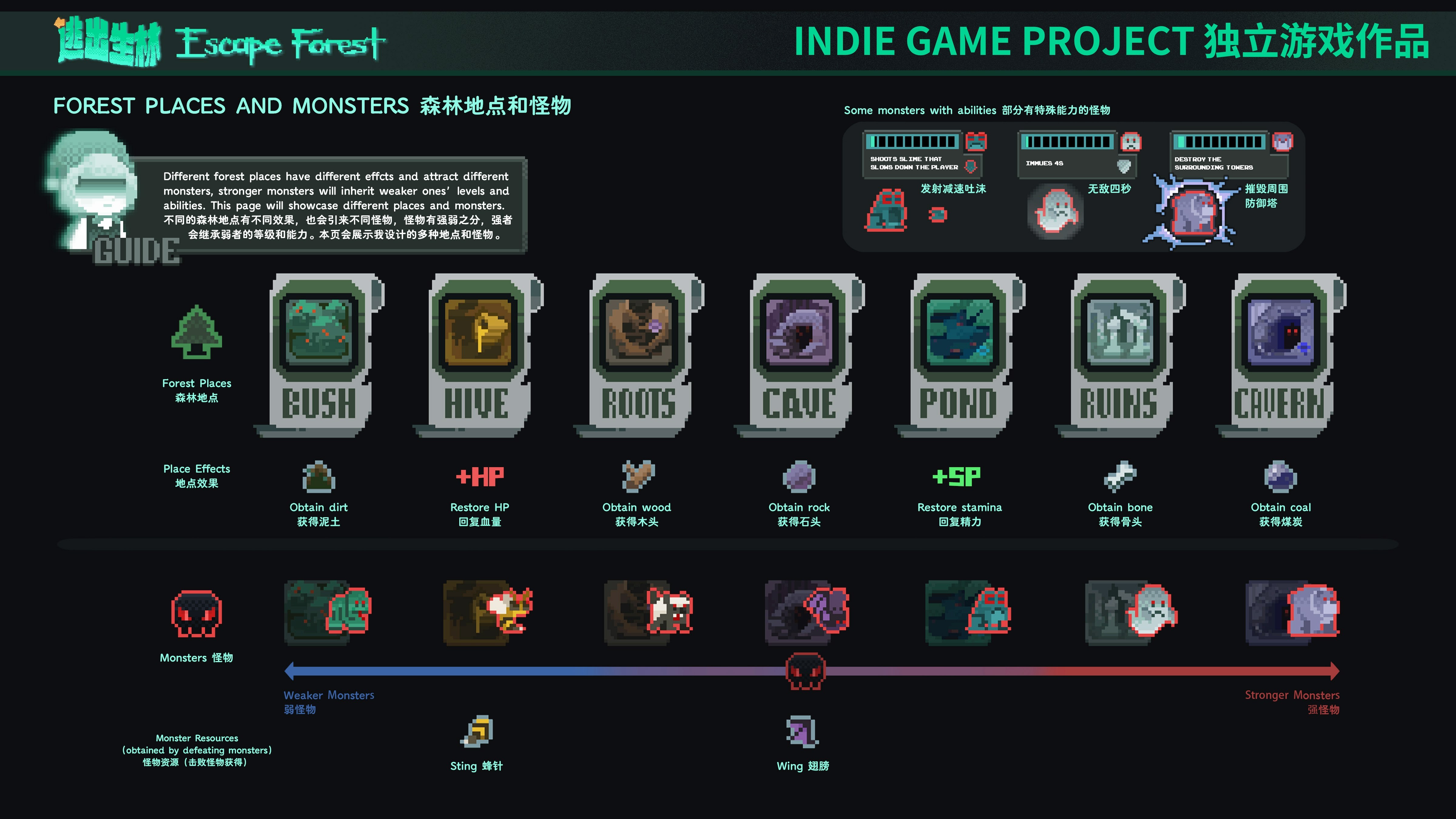
What we kept from Loop Hero: The tile placement system stayed as the strategic backbone. In Loop Hero, tiles shape the world to benefit the player. In Escape^Forest, tiles serve a dual purpose where they generate resources but simultaneously spawn threats.
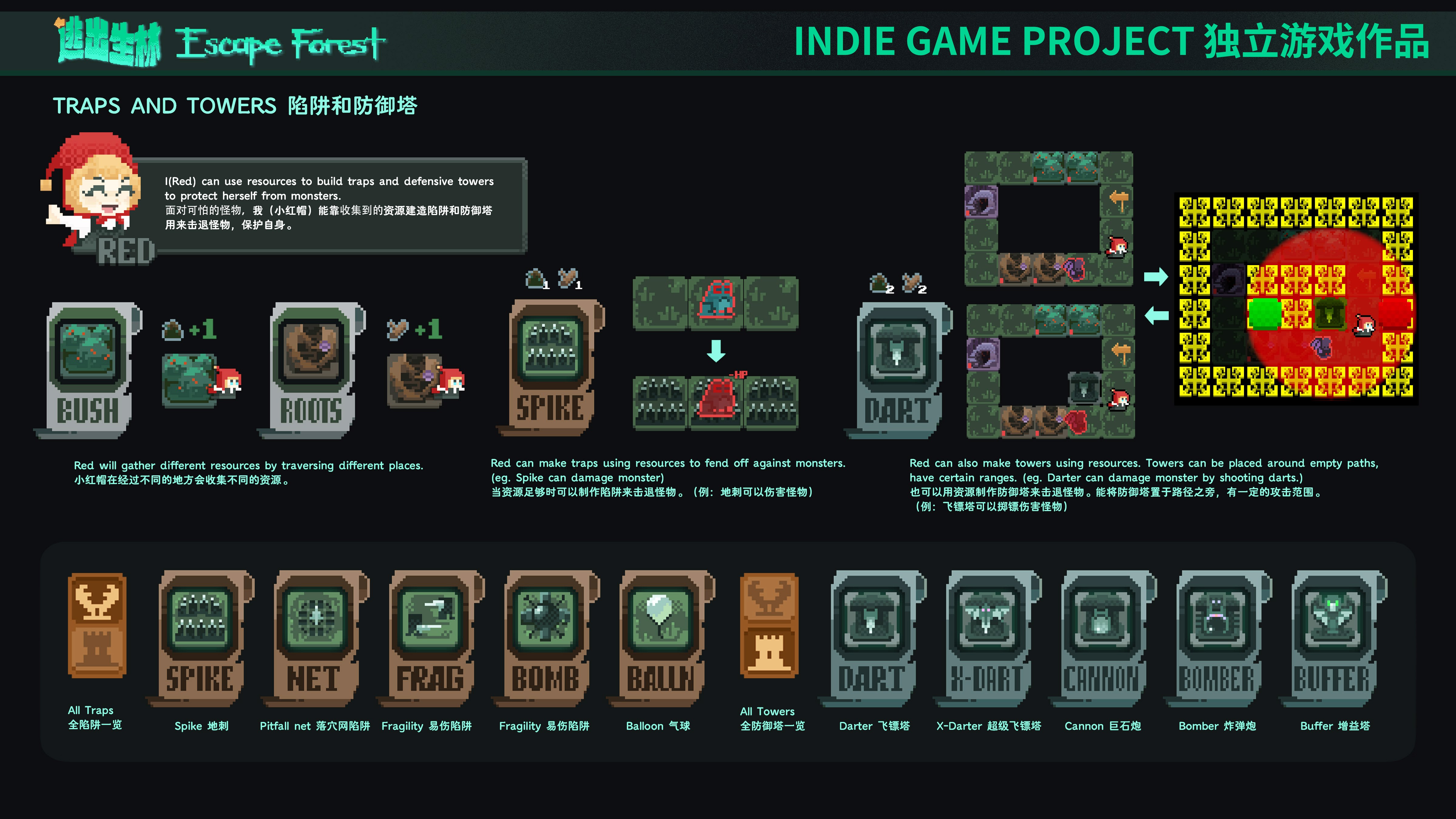
What we added: To complete the game loop, the player needed a way to push back. A protagonist who can only run creates frustration, not tension. Borrowing from tower defense, we gave players passive combat tools: traps on the path, towers beside it.
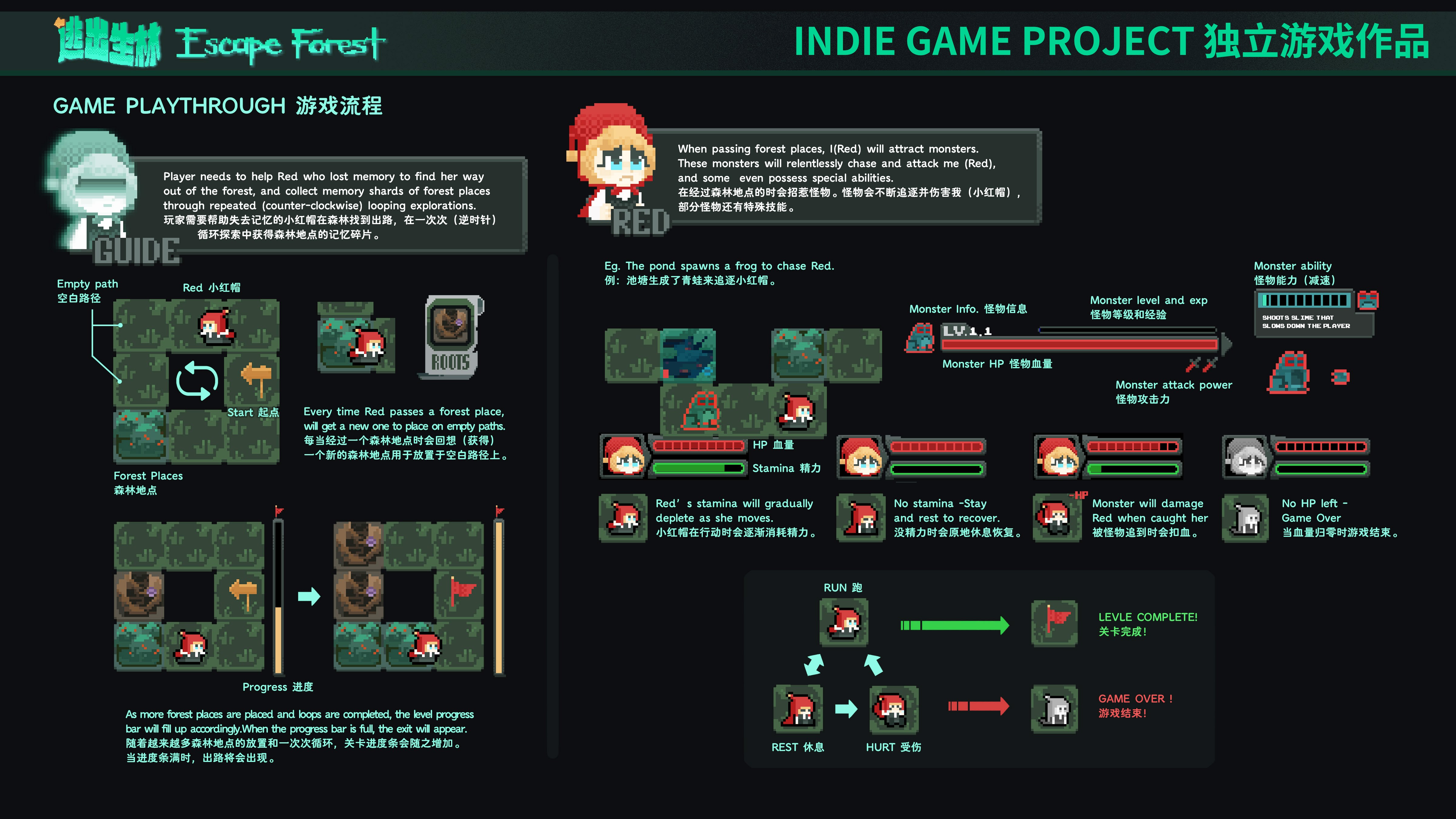
Now the core loop is complete: Pass through Places → Gather Resources + Spawn Monsters → Monsters Pursue & Level Up → Use Resources to Build Traps/Towers → Kill Monsters → Repeat.
Goals: Players don't want to feel trapped in a loop with no way out or only ends in death. Just as Loop Hero uses its narrative to give the loop a destination, Escape^Forest adds a layer of storytelling to create an endpoint. The protagonist RED has lost her memory of the exit. Every action the player takes — placing tiles, helping RED defeat the monsters chasing her — contributes to her recollection. Once the recollection bar is full, RED remembers the way out and finally escapes.
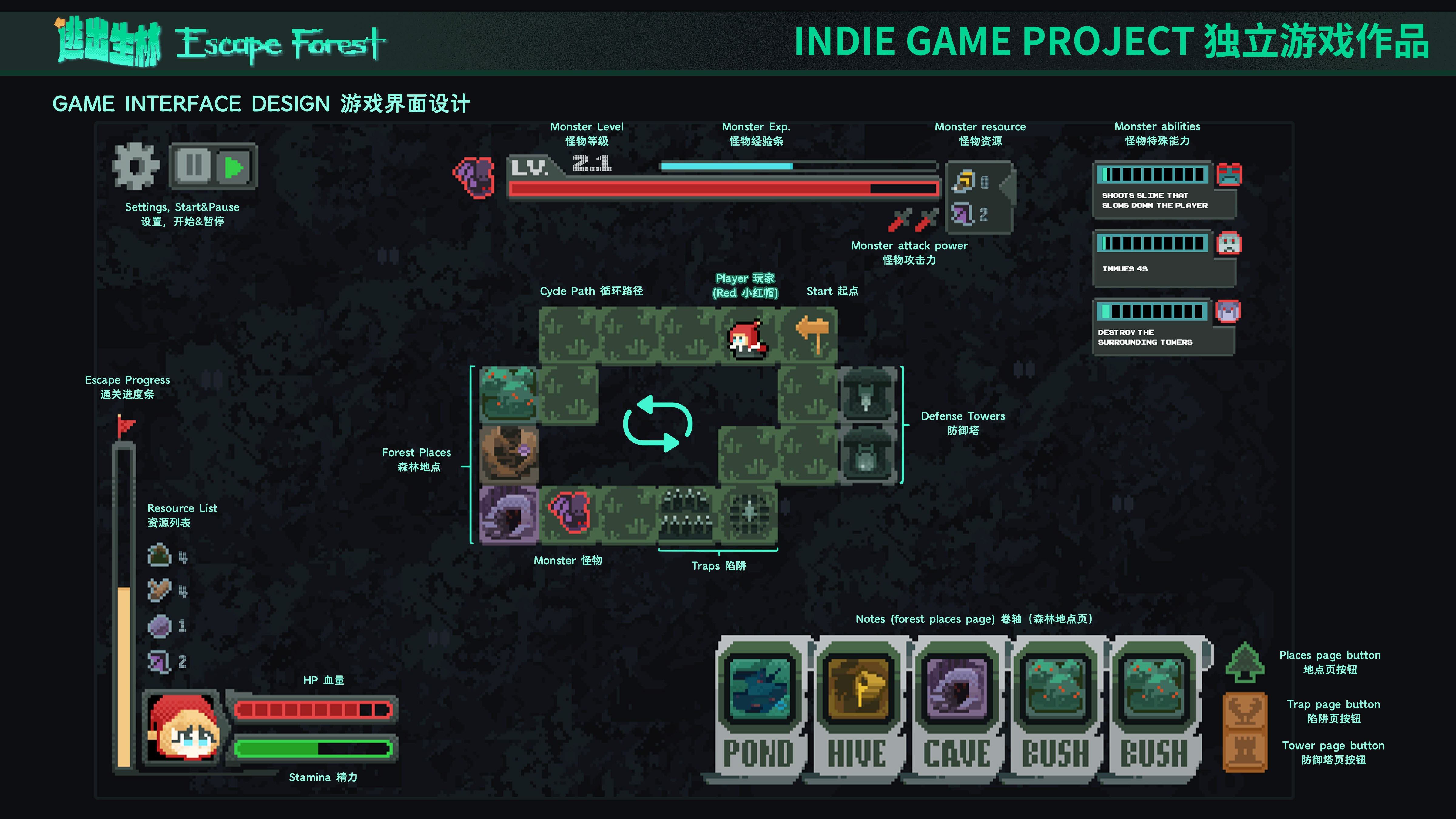
The perspective shift: Loop Hero keeps the player close to the action so that decisions feel personal and immediate. Escape^Forest pulls the camera back to a top-down view. The player becomes an architect, watching Red navigate the consequences of the placement decisions.